Design Evenings | A revamp story
Introduction
When I joined KeyValue, I was introduced to the concept of weekly design studio meetings. These sessions were intended to foster collaboration, share knowledge, conduct peer reviews, and stay updated on industry trends. Initially, the meetings were engaging and valuable, but over time, participation waned due to declining interest and team bandwidth issues.
As the team evolved, with some original members leaving and new designers joining, the culture around these meetings began to fade. I was entrusted with the responsibility of overseeing the meetings, which included planning sessions and ensuring active participation. However, incremental changes to the existing structure failed to address the underlying issues. Recognizing the need for a complete overhaul, I set out to redesign the meeting format to better align with the team's current needs and dynamics.
The Problem
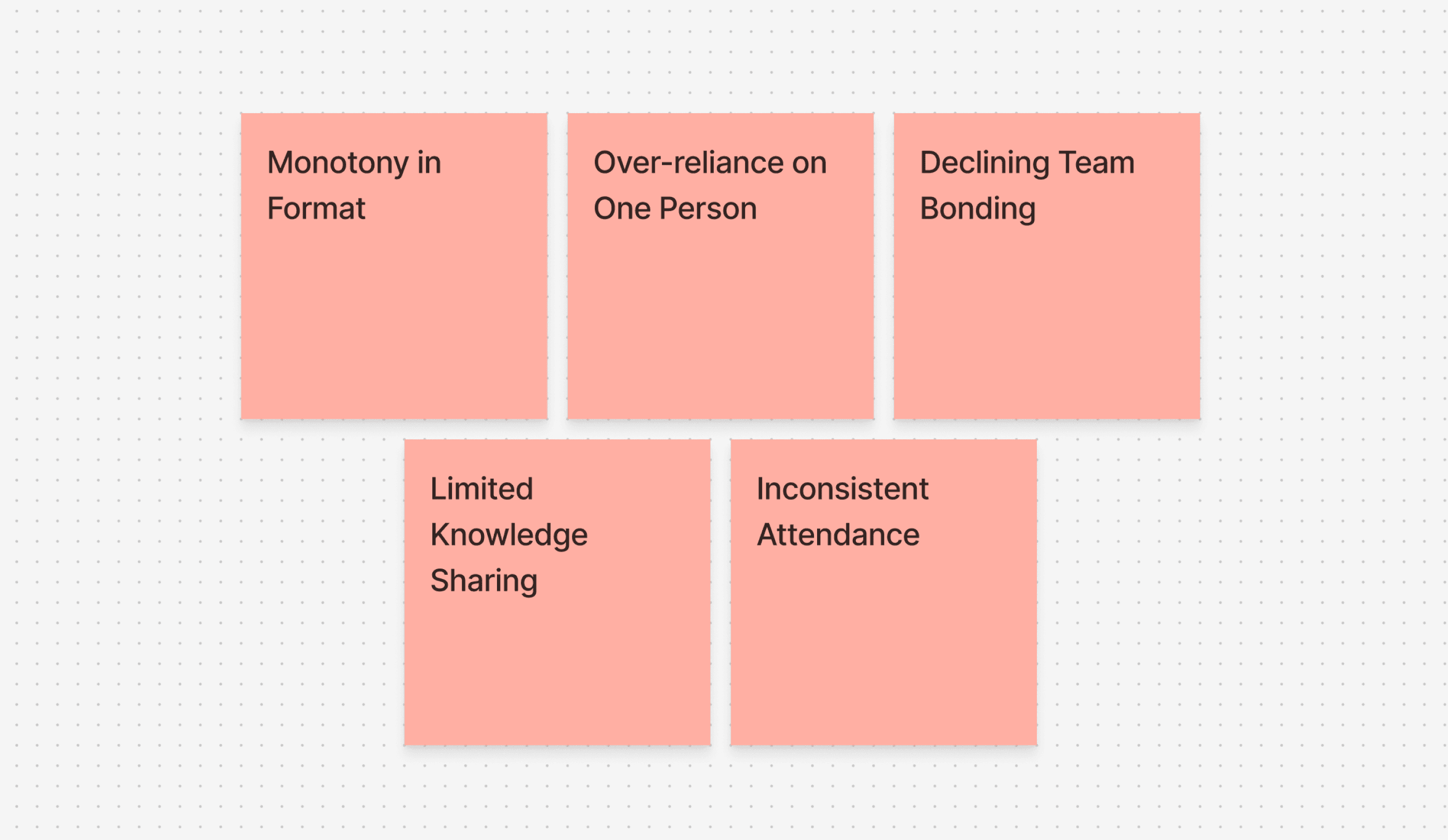
Monotony in Format: Meetings lacked variety and innovation, leading to reduced engagement.
Over-reliance on One Person: The responsibility for organizing and conducting meetings fell on a single individual, limiting diverse contributions.
Declining Team Bonding: Lack of activities that encouraged team connection and collaboration.
Limited Knowledge Sharing: Discussions about industry trends, tools, and skills didn’t happen often and weren’t well-organized.
Inconsistent Attendance: Scheduling conflicts and lack of clarity in roles led to frequent absences.
Goals
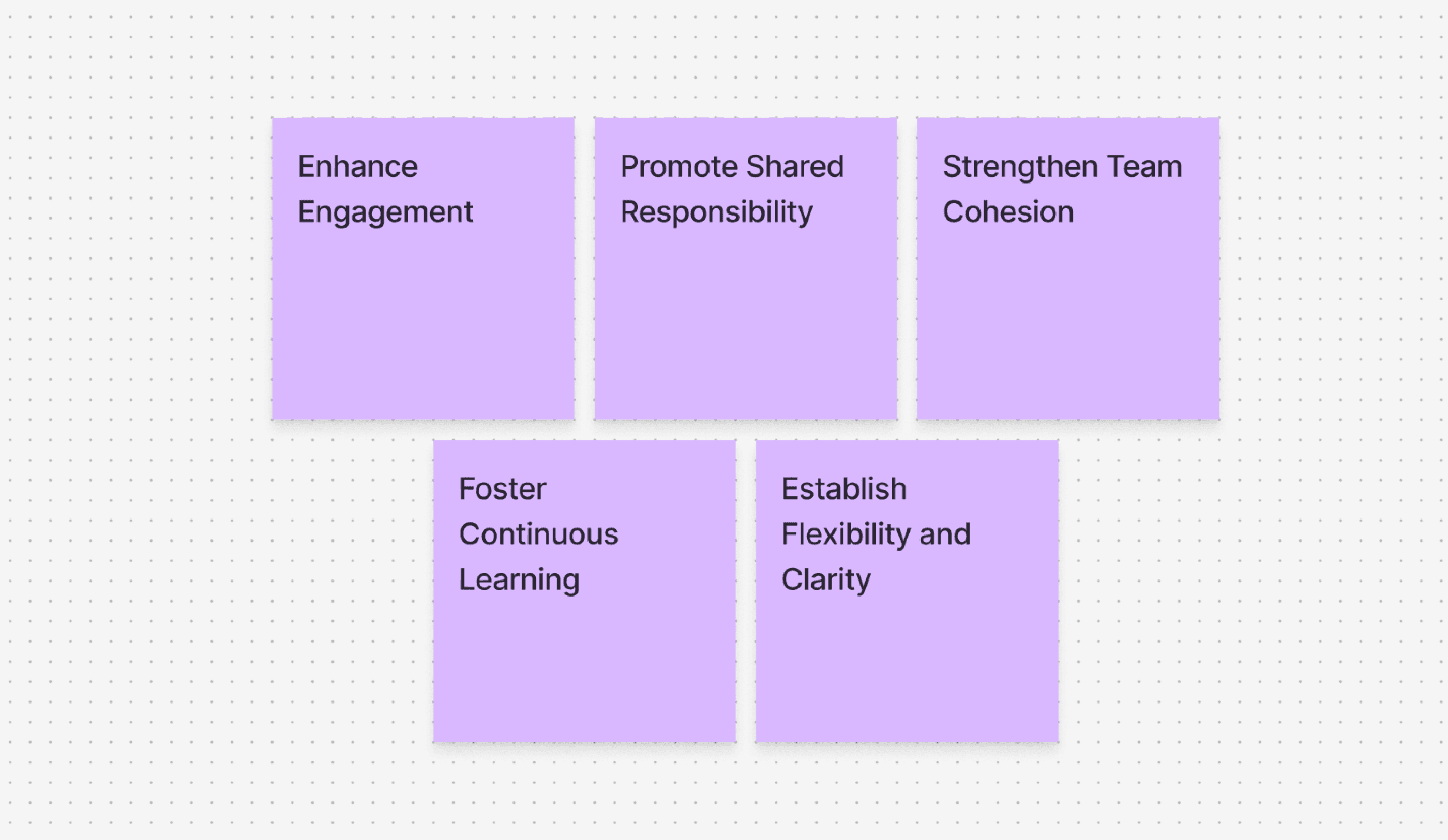
Enhance Engagement: Bring in new ideas and approaches to make meetings more interesting and engaging.
Promote Shared Responsibility: Distribute roles and tasks among team members to encourage ownership and inclusivity.
Strengthen Team Cohesion: Incorporate activities that build trust and collaboration.
Foster Continuous Learning: Create structured opportunities for skill development and knowledge sharing.
Establish Flexibility and Clarity: Provide clear guidelines for rescheduling and ensure transparency in planning.
Approach
Step 1: Diagnose the Issues
I began by gathering feedback from the team to identify pain points. Common concerns included repetitive content, uneven workload distribution, scheduling conflicts, and lack of follow-up on key takeaways.
Step 2: Explore Solutions
I proposed potential improvements, including:
Introducing diverse session formats such as workshops, tech updates, and fun activities.
Assigning specific responsibilities to team members to ensure variety and ownership.
Alternating between learning sessions and bonding activities every other week.
Recording all sessions for future reference and sharing minutes of the meeting (MOM).
Including a flexible rescheduling criterion to ensure maximum participation.
Step 3: Develop and Refine the Plan
A detailed plan was drafted and presented to the team for feedback. Based on their input, the structure was revised to include:
Points of Contact (POCs) for specific activities like workshops, updates, and bonding sessions.
A two-meeting slot system to offer greater flexibility.
A centralized tracking sheet to streamline planning and documentation.
A system for selecting topics, either via team polls or speaker discretion.
Guidelines for notifying absences and ensuring continuity with backup speakers.
Step 4: Execute and Iterate
The new structure was rolled out, accompanied by a walkthrough session to ensure clarity. Feedback mechanisms were put in place to allow for continuous improvement. Periodic reviews were planned to refine the approach further.
Key Changes
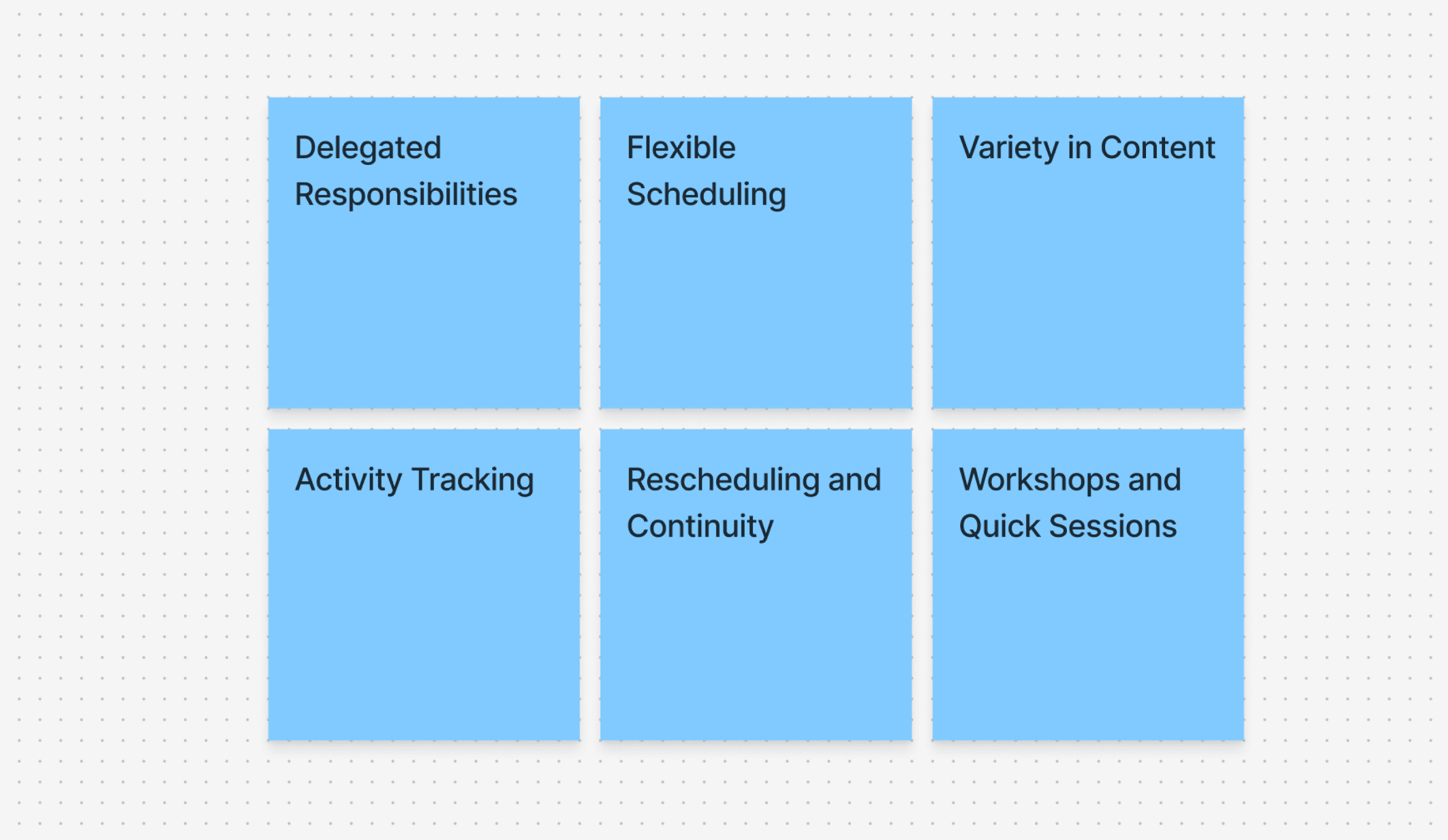
Delegated Responsibilities: POCs were assigned for various activities, fostering a sense of ownership and accountability.
Flexible Scheduling: The two-meeting slot approach accommodated varying team schedules and priorities.
Variety in Content: Alternating between learning and bonding sessions kept meetings engaging and dynamic.
Activity Tracking: A centralized document improved transparency and organization.
Rescheduling and Continuity: Clear criteria for rescheduling ensured meetings were productive and inclusive, even with absences.
Workshops and Quick Sessions: Regular workshops and short whiteboard sessions encouraged continuous skill development.
Results
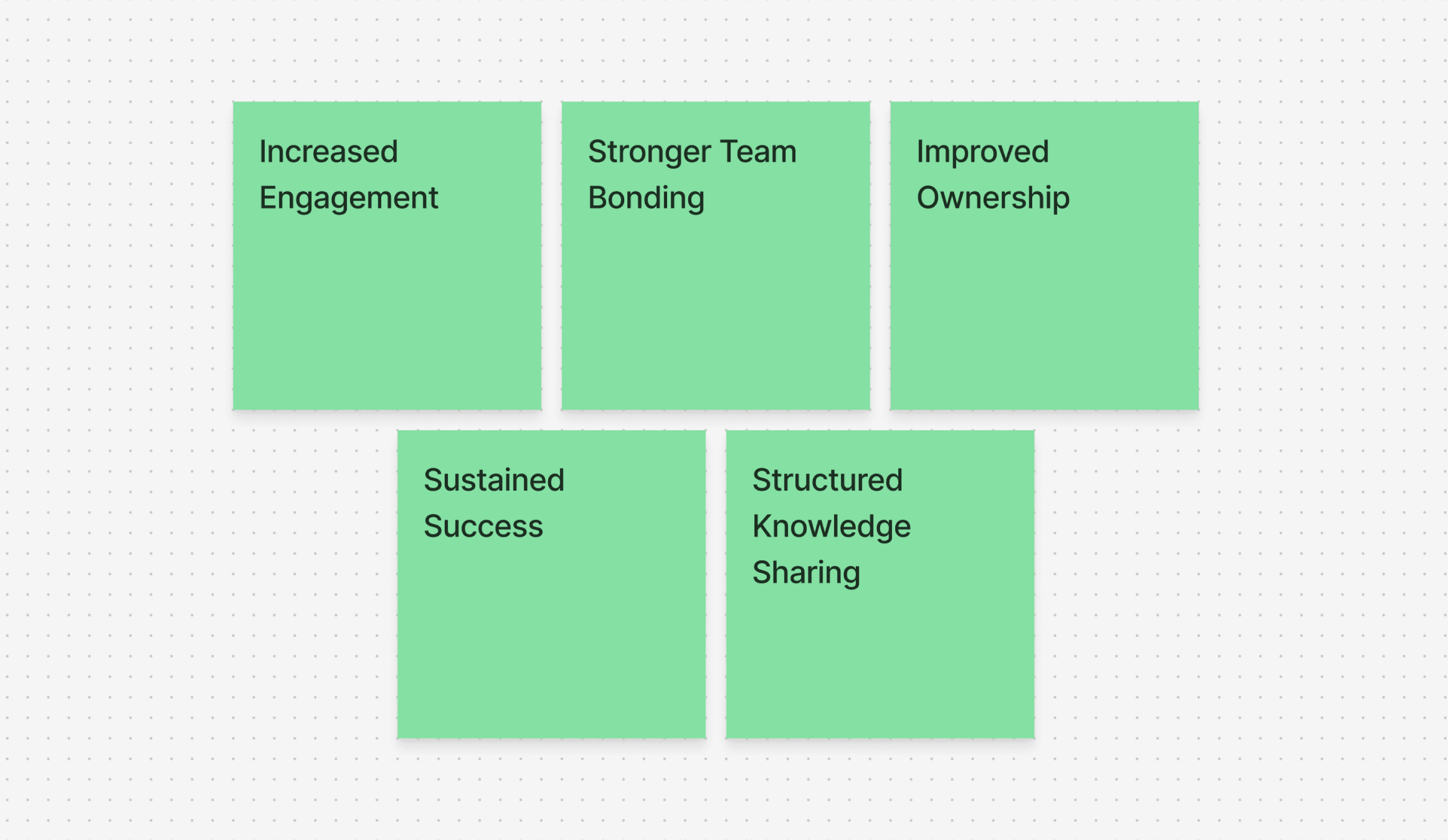
The revamped structure yielded notable improvements:
Increased Engagement: Meetings became more dynamic and inclusive.
Stronger Team Bonding: Collaborative activities enhanced team morale and cohesion.
Improved Ownership: Delegating tasks encouraged diverse contributions and reduced individual workload.
Sustained Success: Three months post-implementation, the new format has been well-received, with over 10 successful sessions completed.
Structured Knowledge Sharing: Recorded sessions and MOM ensured accessibility and documentation for all team members.
Learnings
Team Feedback is Crucial: Involving the team in the planning process ensured that the changes addressed real needs.
Flexibility Enhances Participation: Tailoring the format to fit diverse schedules and priorities increased attendance and engagement.
Shared Ownership Drives Success: Distributing responsibilities created a more collaborative and sustainable meeting structure.
Structure and Variety Matter: Alternating session types and providing clear guidelines kept meetings engaging and relevant.
Conclusion
Revamping the design studio meetings has revitalized our team's collaboration, learning, and engagement. By addressing key challenges and fostering shared responsibility, the new structure has streamlined processes and strengthened team dynamics. This initiative highlights the importance of thoughtful planning, active feedback, and continuous iteration in creating impactful solutions.